Monetizing Hyperlocal: How to Price Your Newsletter Ad Space for Local Small Businesses
Monetizing a local newsletter can be tricky. Here is a comprehensive guide on how to calculate, package, and price your ad space to attract local small businesses.
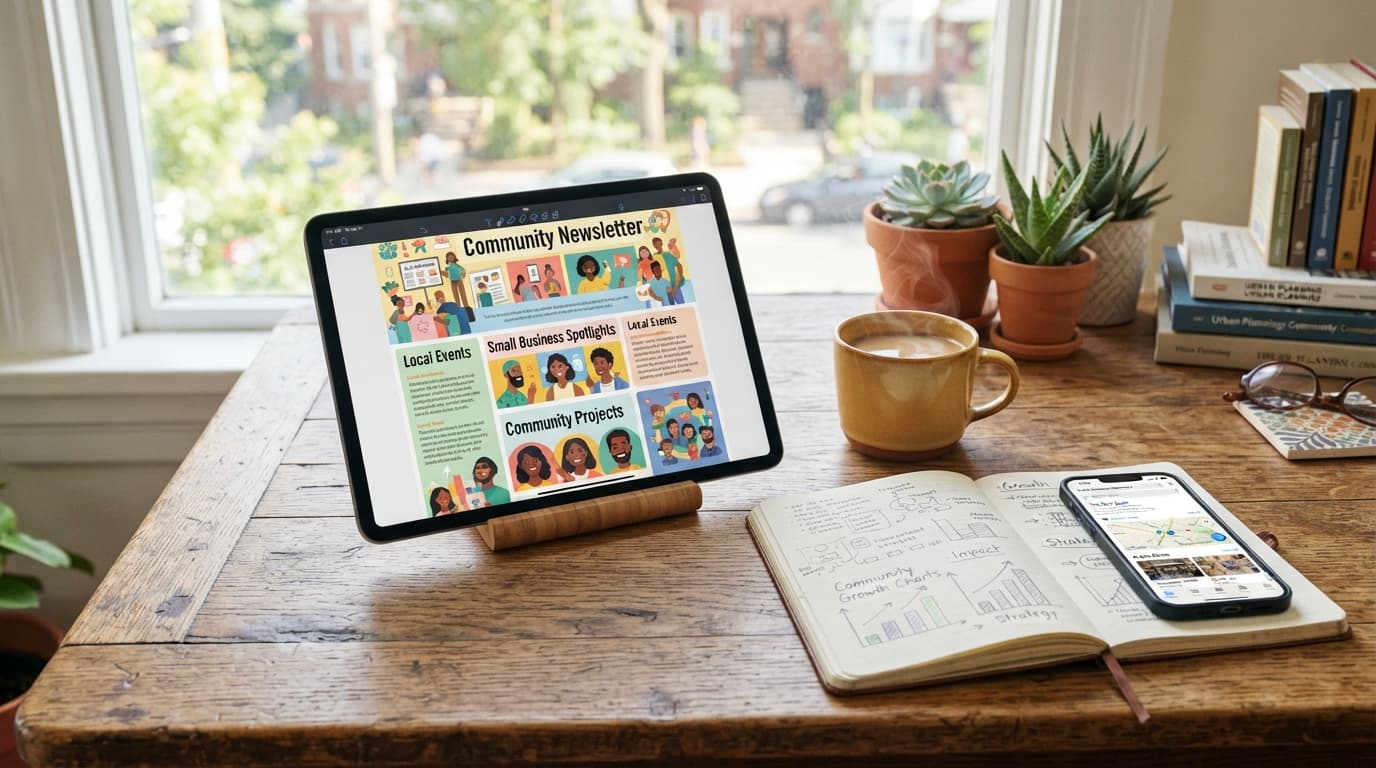
Imagine this: You have spent months, perhaps even years, building a highly engaged, loyal audience of local residents. They open your weekly email newsletter to find out where to eat, what community events to attend, and which local service providers to trust. Your open rates are fantastic, your click-through rates are stellar, and your audience genuinely loves your voice.
Then, a local bakery or real estate agent reaches out and asks: "How much do you charge for an ad in your newsletter?"
Suddenly, panic sets in. If you price your ad space too high, you risk scaring away local business owners who operate on razor-thin margins. If you price it too low, you undervalue your hard work and leave significant revenue on the table. Copying the pricing strategies of massive national newsletters like Morning Brew or the Skimm won't work—their business models rely on scale, whereas yours relies on hyper-local intimacy.
To help you navigate this challenge, we have put together a comprehensive, practical guide on how to price your newsletter ad space specifically for local small businesses. By the end of this article, you will have a clear pricing strategy that respects your local advertisers’ budgets while maximizing your publication's earning potential.
Why Local Newsletter Pricing is Different
In the broader digital marketing world, ad space is typically bought and sold using a metric called CPM, which stands for "Cost Per Mille" (cost per thousand impressions). For example, if a national newsletter has a CPM of $30 and boasts 100,000 subscribers, an advertiser pays $3,000 for a single placement.
However, if you are a local publisher with 1,500 highly dedicated local subscribers, a standard national CPM of $30 would mean you could only charge $45 per ad. That is barely enough to cover your software fees, let alone reward you for the hours you spend curating and writing content.
Local newsletters must price their space differently because local attention is exponentially more valuable to a neighborhood business than national attention. A local boutique does not care about reaching 100,000 people across the country; they care about reaching 500 people who live within a five-mile radius of their storefront. This hyper-targeted focus justifies a premium pricing structure that moves away from traditional, scale-based CPMs.
Key Metrics to Assess Before Setting Your Rates
Before you pick up a calculator, you need to understand the true value of your digital real estate. Local business owners want to see that their marketing spend will translate into foot traffic, brand awareness, or website visits. Gather these key metrics to build your case:
- Subscriber Count: The total number of people on your list. Remember, for local newsletters, quality always beats quantity. A clean, engaged list of 2,000 local residents is far more valuable than a bloated list of 10,000 unengaged contacts.
- Open Rate: While national newsletters average a 20% to 25% open rate, local newsletters frequently see open rates between 40% and 60%. High open rates indicate deep community trust.
- Click-Through Rate (CTR): The percentage of readers who click on links within your email. This proves your audience actively engages with your content.
- Demographics and Location: Can you prove your subscribers actually live in the target zip codes? Use sign-up surveys or location tracking to verify your audience's geography.
Choosing the Right Pricing Model
There are three primary pricing models that work exceptionally well for local newsletter publishers. Let’s break down how each works so you can select the best fit for your business.
1. The Flat-Rate Pricing Model
The flat-rate model is the simplest and most transparent option for both you and your advertisers. Instead of worrying about fluctuations in subscriber counts or click rates, you charge a fixed price per ad insertion or per newsletter issue.
This model is highly attractive to local business owners because it makes budgeting incredibly easy. They know exactly how much they are spending each month, and you know exactly how much revenue to expect.
2. The "Local Premium" CPM Model
If you prefer to align your pricing with your audience's growth, you can use a modified CPM model. Instead of using the low industry-standard CPM of $15 to $30, apply a "Local Premium" CPM of $50 to $100+.
Because your audience is highly localized and boasts high engagement, your CPM should reflect that exclusivity. For instance, with a 3,000-subscriber list and an $80 Local Premium CPM, your rate per ad would be $240.
3. The Tiered/Sponsorship Package Model
Local businesses rarely want just a single ad. They want ongoing visibility. The sponsorship package model groups newsletter ads with other digital assets—such as social media shoutouts, website banner placements, or business directory listings—into tiered packages (e.g., Bronze, Silver, Gold).
This model helps you secure recurring monthly revenue while giving local businesses a comprehensive marketing push across multiple touchpoints.
Step-by-Step Guide to Calculating Your Rates
If you are ready to put numbers on paper, follow this step-by-step formula to establish your baseline rates.
Step 1: Determine Your Monthly Operating Costs
To ensure your newsletter is profitable, you must first understand your baseline expenses. Calculate the monthly cost of your email service provider (ESP), design tools, website hosting, domains, and any local events or travel expenses you incur while gathering content. Add a reasonable hourly rate for your own labor to establish your true operational cost.
Step 2: Map Out Your Ad Placements
Not all real estate in your newsletter is created equal. Typically, you should offer three distinct ad tiers based on where they appear in your layout:
- Primary/Header Sponsor (Top of the Newsletter): Highly visible, includes an image, headline, 50-70 words of copy, and a call-to-action button. This commands your highest price.
- Secondary/Mid-Bullet Sponsor (Middle of the Newsletter): Great for events or quick promotions. Includes a smaller logo, 30 words of copy, and a text link. Priced moderately.
- Classified/Community Board (Bottom of the Newsletter): Text-only, 15-20 words, perfect for local job postings, real estate listings, or small announcements. Highly affordable for micro-businesses.
Step 3: Run the Math (A Practical Example)
Let's look at a realistic scenario for a local newsletter with 2,500 subscribers and an average open rate of 50% (meaning 1,250 people open every single issue).
Using a value-based, flat-rate approach, we can structure the weekly issue rates as follows:
- Primary Sponsor: $150 per issue. (This equates to a highly reasonable $120 CPM of opened emails, offering massive local exposure).
- Secondary Sponsor: $75 per issue.
- Classified Ad: $25 per issue.
If you sell one primary, one secondary, and two classified slots per weekly issue, you will generate $275 per week, or $1,100 per month. As your subscriber list grows and your engagement remains high, you can scale these rates upward accordingly.
Step 4: Create Multi-Issue Discounts
Consistency is key in local advertising; a single ad rarely moves the needle for a small business. Encourage repeat bookings by offering discounts for multi-issue commitments. For example, if your primary ad rate is $150 per single issue, offer a 4-issue package for $500 (saving the advertiser $100 and securing a full month of predictable revenue for you).
The FluxLocal Advantage
Managing ad sales, tracking inventory, showcasing your local reach, and dealing with back-and-forth email negotiations can quickly become a full-time job. This is where partnering with a dedicated local platform makes all the difference.
With FluxLocal, local community publishers get access to a powerful suite of tools designed specifically to bridge the gap between community builders and neighborhood businesses. By leveraging FluxLocal’s integrated local business directories, community event calendars, and streamlined sponsorship tools, you can easily package your newsletter ad space alongside premium local digital listings.
Instead of pitching your newsletter as an isolated marketing channel, FluxLocal allows you to offer local businesses a holistic, multi-channel presence. Advertisers can claim their spot in your local directory, promote their weekend events, and sponsor your newsletter in one seamless ecosystem. This elevated, professional presentation gives local business owners the confidence they need to invest their marketing budgets with you.
Tips for Pitching Your Ad Space to Local Businesses
Pricing your ad space correctly is only half the battle; you also need to know how to sell it. Keep these tips in mind when reaching out to local business owners:
- Focus on Solutions, Not Metrics: Small business owners often don't understand terms like "open rates" or "CTR." Instead of telling them you have a 52% open rate, tell them: "Every week, I put your business directly in front of 1,300 local residents who are actively looking for weekend activities."
- Offer a "First-Time Advertiser" Trial: Reduce the barrier to entry by offering a discounted trial rate for their first ad. Once they see the traffic, inquiries, or brand awareness it generates, they will be much more receptive to signing a multi-month contract.
- Design the Ad for Them: Many local business owners are incredibly busy and lack design skills. Offer to write the ad copy and design a basic graphic using clean templates. Removing this friction makes it incredibly easy for them to say "yes."
- Provide Proof of Performance: After their ad runs, send them a simple report showing how many people opened that specific newsletter issue and how many clicked on their link. This transparency builds long-term trust.
Final Thoughts
Pricing your local newsletter ad space doesn't have to be a guessing game. By moving away from national, high-volume CPM models and embracing value-based flat rates or packaged sponsorships, you can build a sustainable, highly profitable local media business that genuinely supports your local community's economy.
Remember, your local small businesses want to support you just as much as you want to support them. With a clear, fair pricing sheet and the right structural support, you can turn your passion project into a thriving hyper-local enterprise.
Are you ready to elevate your community publication, streamline your local ad sales, and connect directly with businesses in your area? Explore how the community platform at FluxLocal can help you organize, monetize, and scale your local presence today.
---CONTENT_END---